

How Do You Prepare Your Child for Secondary School?

In this article
The summer holidays before the first year of secondary school are, for many parents, a mix of pride and mild worry. Your child is about to step into a new world: a new school, new teachers, new friends and a very different way of working from primary school. Good preparation doesn't start on the first day of school, but already during the holidays.
What really changes at secondary school?
At primary school, your child spent the whole day in one classroom with the same teacher. At secondary school, that is fundamentally different. For every lesson, your child changes classroom, teacher and often classmates too. On top of that, the amount of homework goes up and your child becomes responsible for keeping track of what needs to be done. There is no teacher sending a note home every evening.
This means planning and independence suddenly become crucial skills. Children who are good at these find secondary school challenging but fun. Children who struggle with them can quickly get stuck, not because of a lack of intelligence, but because of a lack of structure.
Practical steps to prepare your child
Preparing for secondary school doesn't have to be heavy going. A few targeted steps already make a big difference:
- Practise planning: let your child start working with a planner during the summer holidays. Write down appointments, outings and activities. Getting used to writing everything down instead of trying to remember it pays off.
- Cycle the route to school: if your child doesn't know the way to the new school yet, cycle the route together a few times. This takes a lot of the tension out of the first day.
- Talk about what feels scary: making new friends, not knowing the way, unfamiliar teachers. Name it and normalise it. Almost all children in the Brugklas, the first year of secondary school, feel this.
- Sort out the school supplies in good time: a fully packed school bag and a clear planner give your child the feeling of being well prepared. That feeling really counts on day one.
How do you support your child without taking over?
The temptation is strong, as a parent, to arrange everything: filling in the planner, making the homework schedule, checking that everything is in the bag. Yet it is precisely important to give your child that responsibility, with you as a safety net in the background.
Ask questions instead of giving instructions: "What do you still need to do for school tomorrow?" works better than "Have you done your homework yet?" Let your child keep their own schedule in the planner, and check in weekly rather than daily. That way you build independence without leaving your child to fend for themselves.
The first few weeks: what can you expect?
The first weeks at secondary school are almost always overwhelming, for your child but for you too. Many children come home exhausted in the first week. They have to remember everything: timetables, classrooms, teachers, new classmates. Give your child room to settle in. Cut back on after-school activities for the first few weeks and make sure they get enough rest and sleep.
If it still feels very hard after four to six weeks, that is the moment to actively look for help with structure. A good planner, homework support or a talk with the mentor (the teacher who looks after your child's class) can then make the difference.
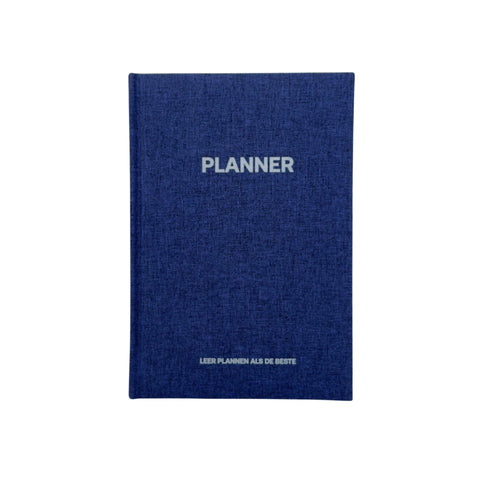
The Grip Schoolagenda from Scholis
The Grip Schoolagenda was developed specially for pupils in the lower years of secondary school. With a clear weekly structure, children in the Brugklas learn step by step to plan independently. Proven to work: in a pilot study with 150 pupils at two schools, we saw demonstrably better study results and less stress.
€22.50
View the Grip SchoolagendaAlso read: Brugklas tips: what nobody tells you beforehand and From primary school to secondary school