

How much homework do you get in the Brugklas? What to expect

In this article
The short answer: in the Brugklas (the first year of Dutch secondary school) you get on average one to one and a half hours of homework a day once the school year is properly under way. It is less in the first weeks, more in test weeks, and it varies by school and level. But anyone who only looks at the hours misses what really matters. The biggest difference from primary school is not the amount of homework but that from now on you have to organise it yourself.
How it builds up
Schools deliberately start gently. In the first weeks your homework consists mainly of small assignments and getting your things in order. From about week three or four the first learning tasks and short tests (called SOs in Dutch schools) are added, and around the autumn holiday the machine is running at full speed, with in many schools the first proper test week in November as the final boss of the first term. This build-up is deliberate: you get time to get used to the rhythm before it counts.
Assignments and learning work: the difference that explains everything
Homework comes in two flavours, and it pays to keep them apart. Assignments are either finished or not: sums, exercises, a report. They are easy to plan, because you see exactly what needs doing. Learning work is more treacherous: vocabulary, concepts, a chapter for a test. It is never really finished, often only appears on your schedule days later, and so feels less urgent. That is exactly where most first-years go wrong: assignments get done, learning work slides to the evening before the test. Anyone who treats learning work like assignments, with a fixed slot in the week, has already learned the most important lesson of the Brugklas.
Twelve subjects, twelve schedules
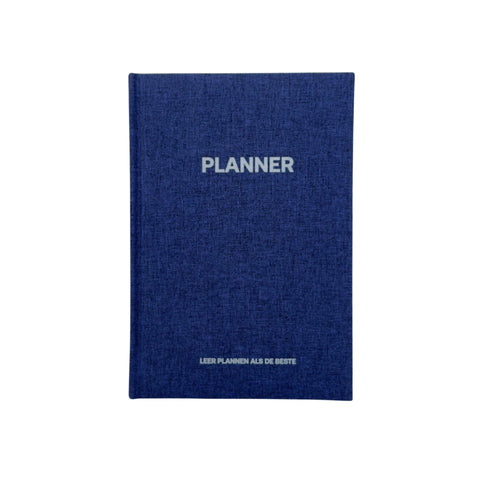
At primary school, your teacher told you what to do that week. Now you have twelve to fourteen teachers who don't see each other and all set homework as if their subject were the only one. Nobody keeps an eye on the total except you. That is why your school planner is not a formality but your most important tool. The golden habit: write homework down in the lesson itself, at the moment the teacher sets it, together with the date it is due. Anyone who thinks they'll remember it later has already forgotten it by the time they reach the bike shed.
How to keep it manageable
- Choose a fixed homework time. The same time every day, for example after dinner. A fixed slot no longer takes willpower; it simply becomes part of the day.
- Look ahead at the week on Sunday. Five minutes leafing through your planner shows which days will be busy, so you can bring learning work forward.
- Start with the subject you are dreading. The rest then feels light, and you avoid leaving the hardest bit until last.
- Done is done. Anyone who plans and finishes their homework is properly free afterwards, without a nagging feeling. That is the reward of the system.
For parents: when to raise the alarm?
If your child is regularly working for more than two hours every evening, or never for longer than ten minutes, that is a signal. Often the cause is not the subject itself but the planning: everything at the last minute, or no view of what is coming. Start the conversation about the approach rather than about the grades, and if in doubt, get in touch with the mentor. They see how things go in class and are happy to think along.
Grip Schoolagenda | Daily Planner for Secondary School
The Grip is made for exactly this: keeping twelve subjects under control. With space for assignments and learning work every day and a week overview that shows what is coming, so learning work never catches you out again.
€22.50
View the Grip SchoolagendaRead also: Planning homework: 5 tips that really work and How to make a homework schedule you can actually stick to