

Studying without your phone: how to make it really work

In this article
Everyone knows it: studying goes better without your phone. And yet for most students it sits right next to the notebook. The problem isn't that you don't want to; the problem is that willpower loses out to a device designed to grab your attention. So the answer isn't more willpower, but a smarter set-up. Here's how to go about it.
Why silent on the desk isn't enough
Most students switch their phone to silent and think that's that. But a phone lying in plain sight on the desk keeps pulling at your attention, even without a sound. Part of your brain keeps checking whether something might have come in, and every time you see it lying there, you have to decide all over again not to pick it up. All those little decisions use up exactly the concentration you need for your homework. Out of sight is the real goal, not just out of earshot.
Choose your level
Not everyone needs to go straight to the strictest regime. Choose the level that suits you, and step it up if you need to:
- Level 1: invisible in the same room. Phone on silent, in your bag or in a drawer. Not on the desk, and not face down either. Often enough for short homework sessions.
- Level 2: another room. The phone stays in the hallway or the living room. Checking it now means getting up, and that small hurdle turns out to be surprisingly effective.
- Level 3: in your parents' safekeeping. For test weeks and the subjects you really have to knuckle down for. Not as a punishment, but as an agreement: from seven until half past eight it stays downstairs. What you can't reach can't distract you.
Work with fixed check-in times
The fear of missing out is often the real reason the phone stays within reach. The solution: agree with yourself when you'll look, instead of trying never to look. Study in blocks of 25 or 30 minutes and check your messages during the five-minute break in between. That way you miss nothing at all; everything is still there after your block. The difference is that you decide when to look, rather than your phone.
Let your friends know you're studying
A big part of the pressure comes from the group chat: if you don't reply quickly, you feel guilty. Break that by simply saying it: send a quick message to the group before you start, or set your status to "studying until half eight". Chances are your friends have the same problem and secretly think it's a good idea. Replying after your study block is early enough; nobody will remember in a week who replied at a quarter past seven.
Replace the timer
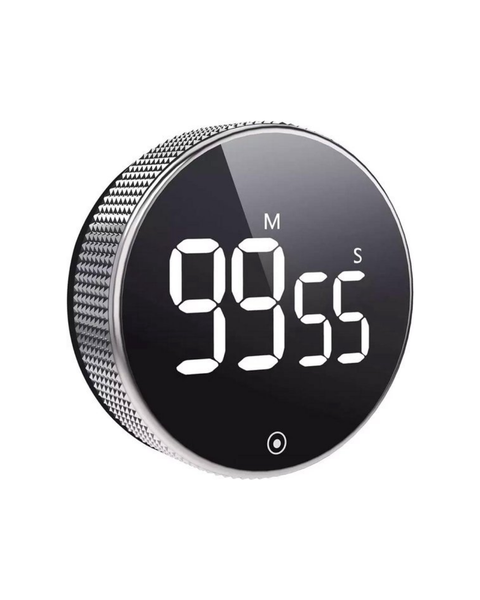
The classic excuse for keeping your phone on the desk: "I use it as a timer for my breaks." Understandable, but it's like using the biscuit tin as a paperweight while you're on a diet. Use a separate timer or clock for your study blocks, and the last excuse disappears, so the phone can really leave the room. You'll notice that the first ten minutes feel bare, but then a kind of calm sets in that you never get with your phone nearby.
The Scholis Studieklok
A simple digital countdown timer for your study blocks, with no apps, notifications or temptations. Set it to 25 minutes, put your phone in another room and get started.
€9.95
View the StudieklokRead also: The Pomodoro technique: studying in 25-minute blocks and Improving concentration while studying